



Do I Have Carpenter Ants or Termites?
Both carpenter ants and termites live in wood, both produce swarmers in spring, and both can quietly damage a home for months before a homeowner notices anything. Misidentifying one for the other is easy, and it matters more than most people realize. The treatment for carpenter ants and the treatment for termites have almost nothing in common. Treating for the wrong pest wastes money and leaves the actual problem untouched while the damage continues. In Hampton Roads, where the climate supports both carpenter ant colonies and subterranean termite colonies through most of the year, getting the identification right the first time saves both money and avoidable structural damage.
If you've found what looks like damage, swarmers, or something like sawdust near a wall or door frame, here's how to sort out which pest you're dealing with.
What Each Pest Actually Looks Like
The most reliable way to tell these two apart is to look at the insect itself. Carpenter ants and termites look genuinely different once you know what to compare, and you don't need a magnifying glass to see the key differences.
The Key Visual Differences
Carpenter ants are large and dark, usually black or dark brown, with a distinct pinched waist, a narrow segment between the thorax and abdomen that's visible to the naked eye. Their antennae are bent at an angle, like an elbow.
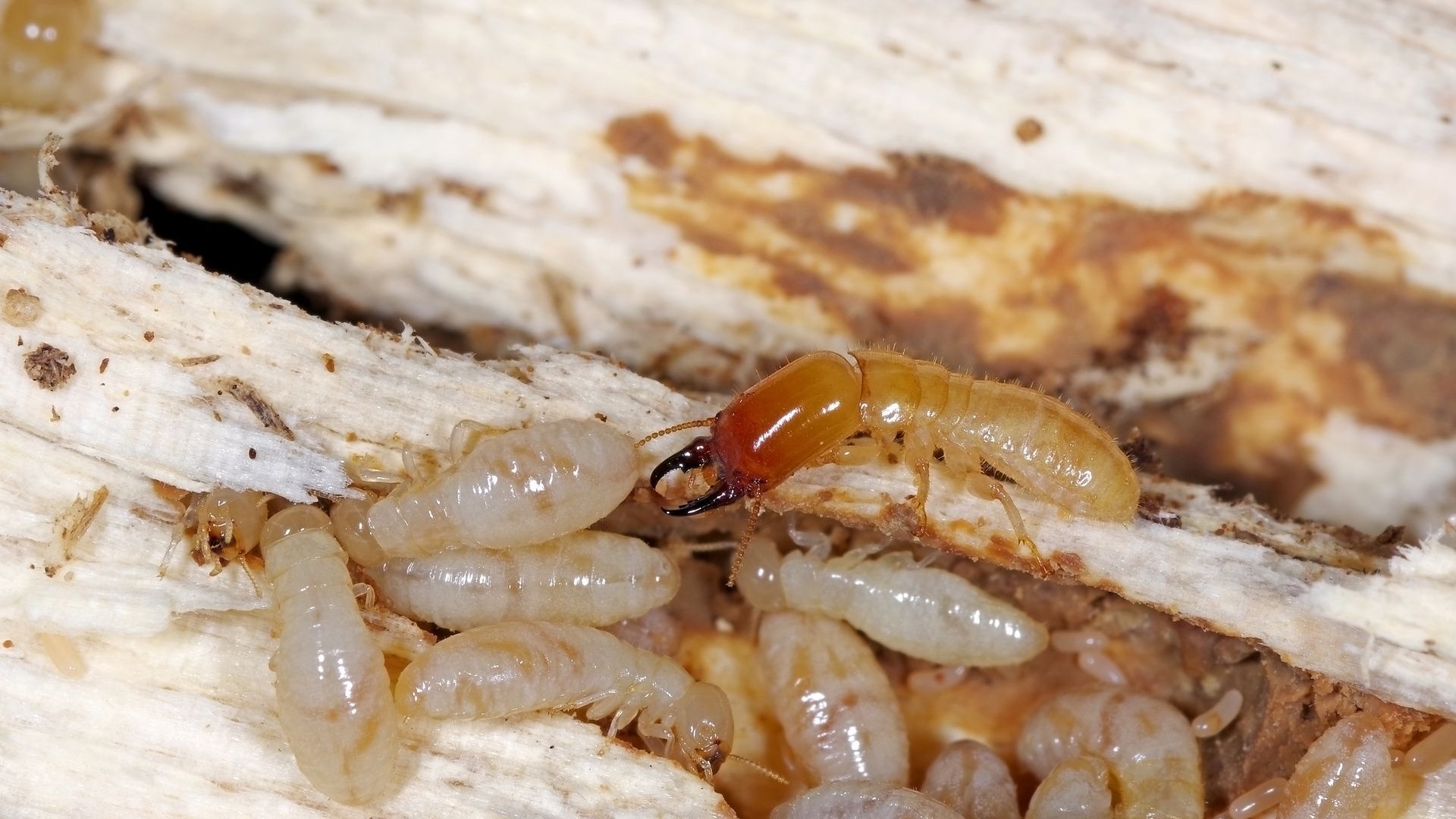
Termite workers, the ones most commonly found inside wood, are cream or off-white and much smaller. They look soft and pale next to ants. Most importantly, there's no visible waist. Their bodies are thicker and more uniform from front to back, with straight, bead-like antennae that don't bend.
The swarmers, the winged versions of each pest that emerge in spring, are where most homeowners get confused. Both carpenter ant swarmers and termite swarmers emerge around the same time of year and both look like flying ants at first glance. The physical differences:
Carpenter ant swarmers have unequal wings (front pair longer than the back), a pinched waist, and bent antennae- Termite swarmers have wings of equal length, no visible waist pinch, and straight antennae
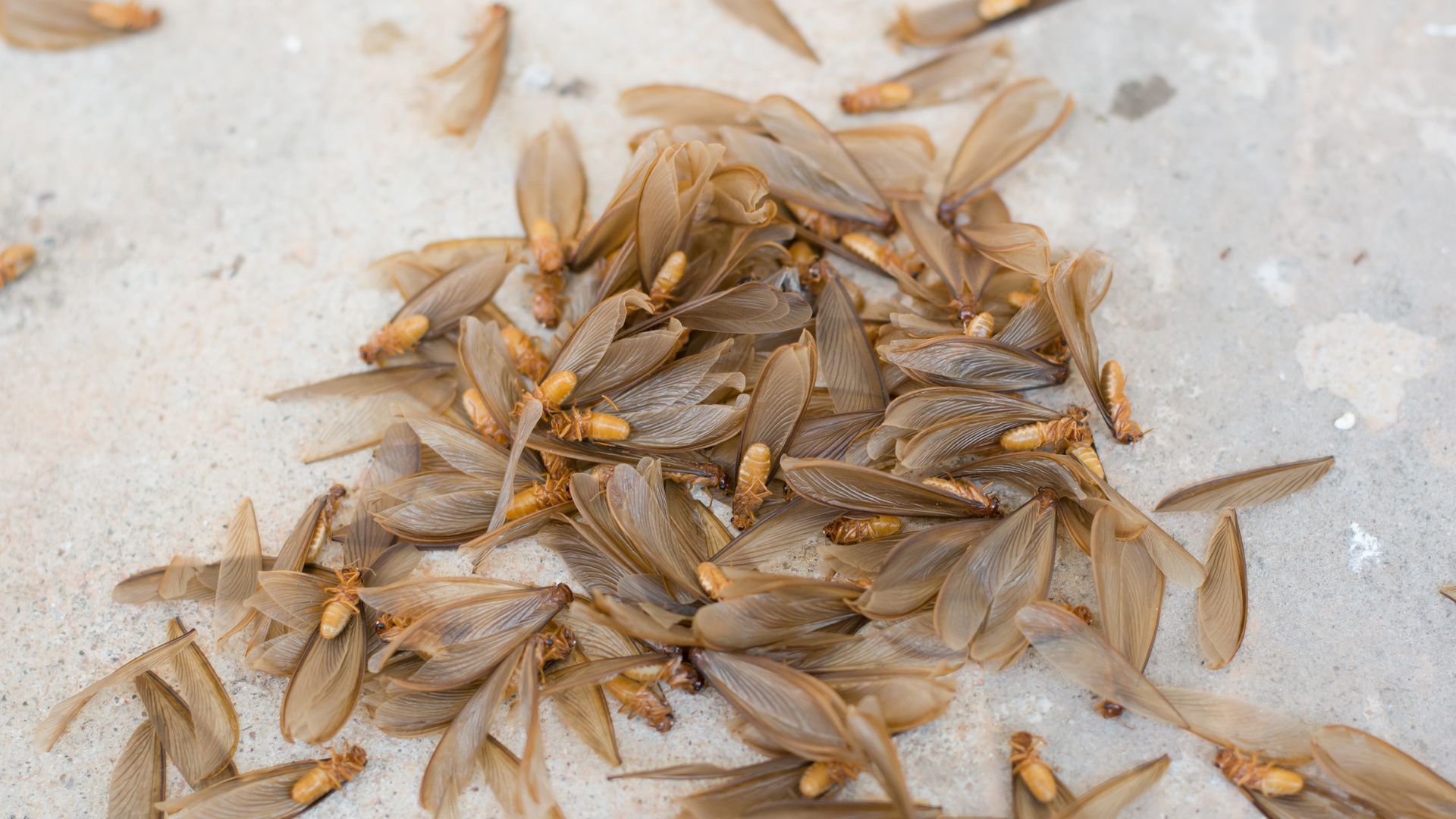
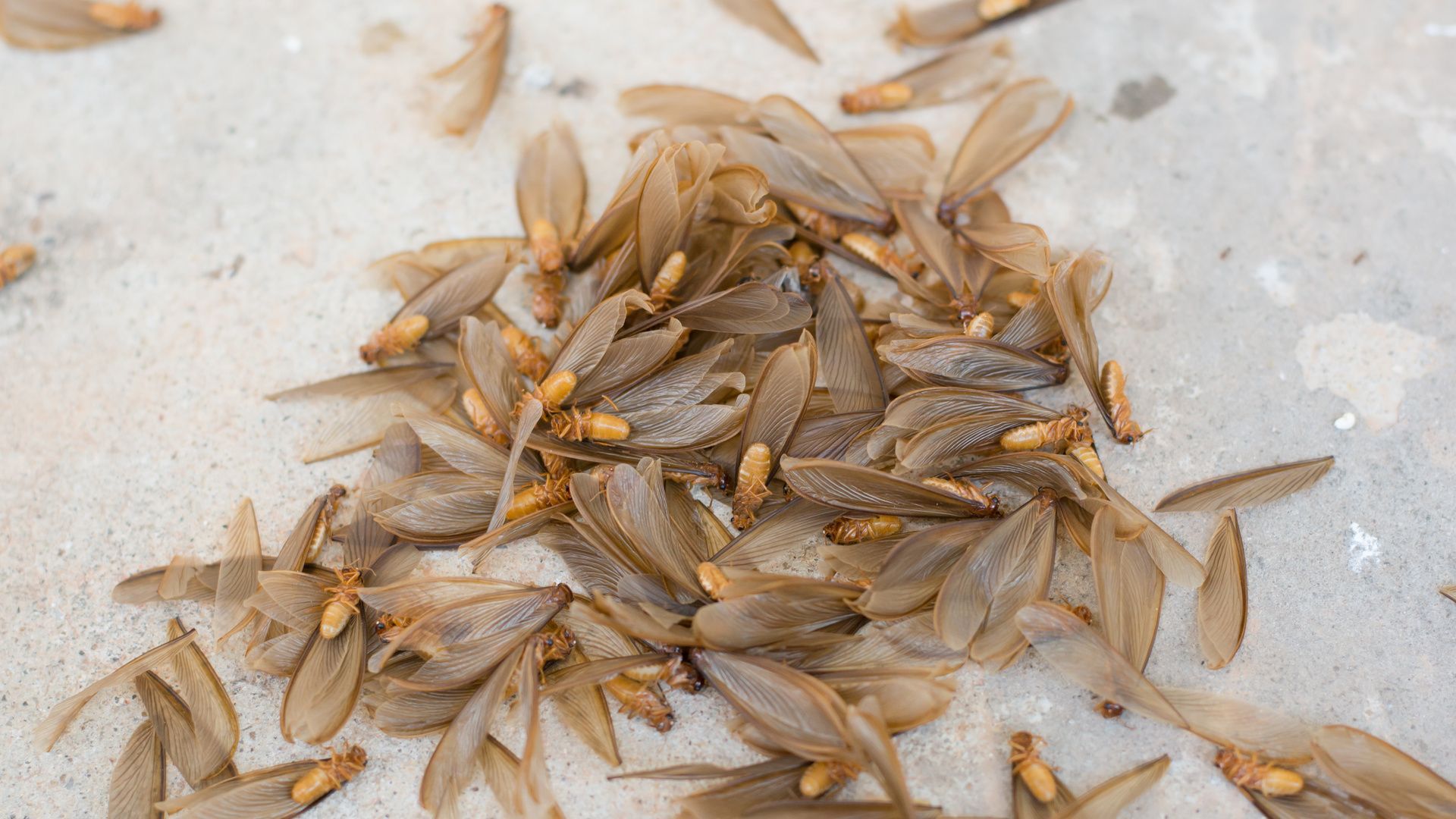
- Termite swarmers shed their wings quickly after emerging; a pile of equal-length discarded wings near a window or exterior door is a strong termite indicator
Finding shed wings without the insects means you may have missed the swarm. The colony is already established somewhere in your home.
The Key Visual Differences
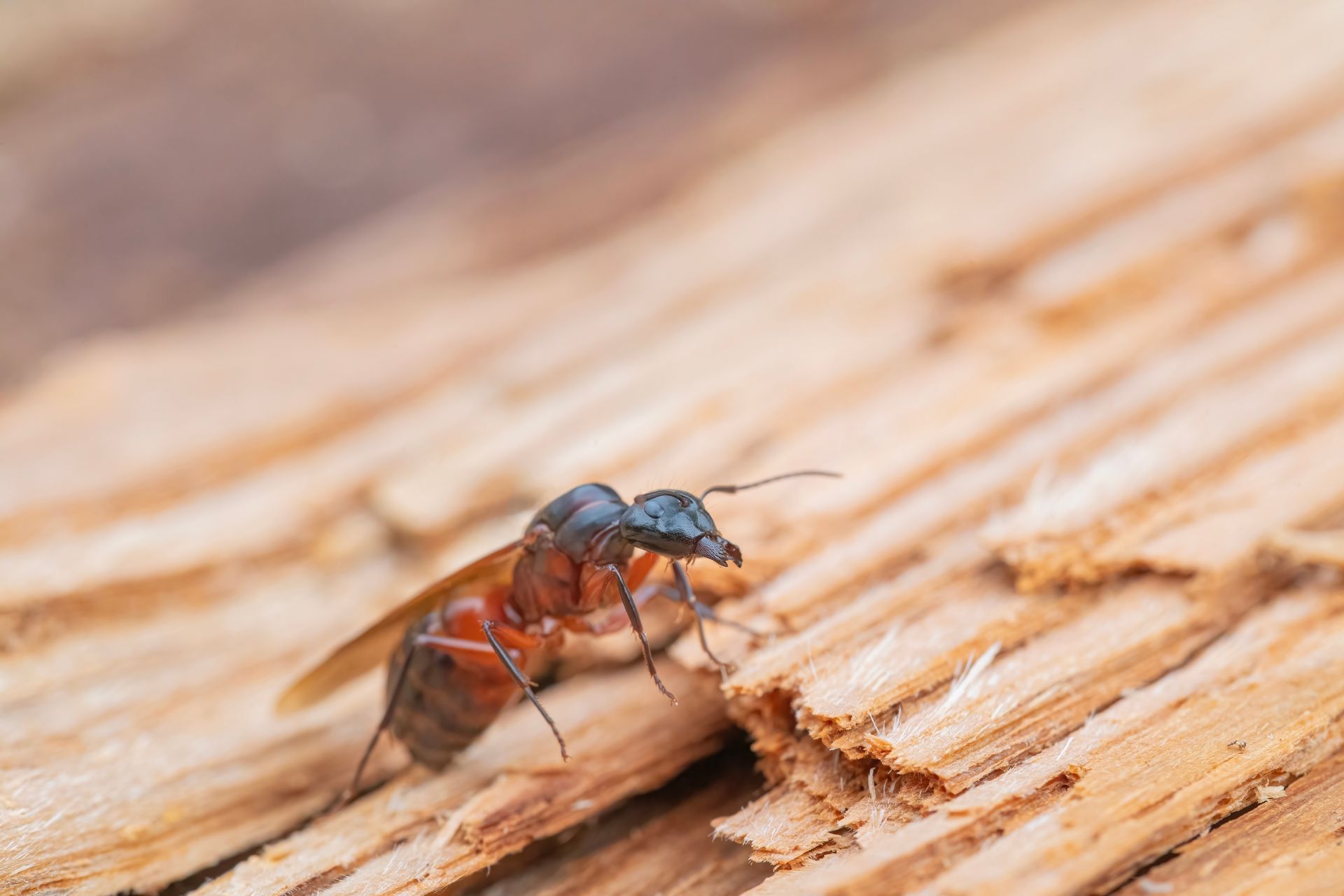
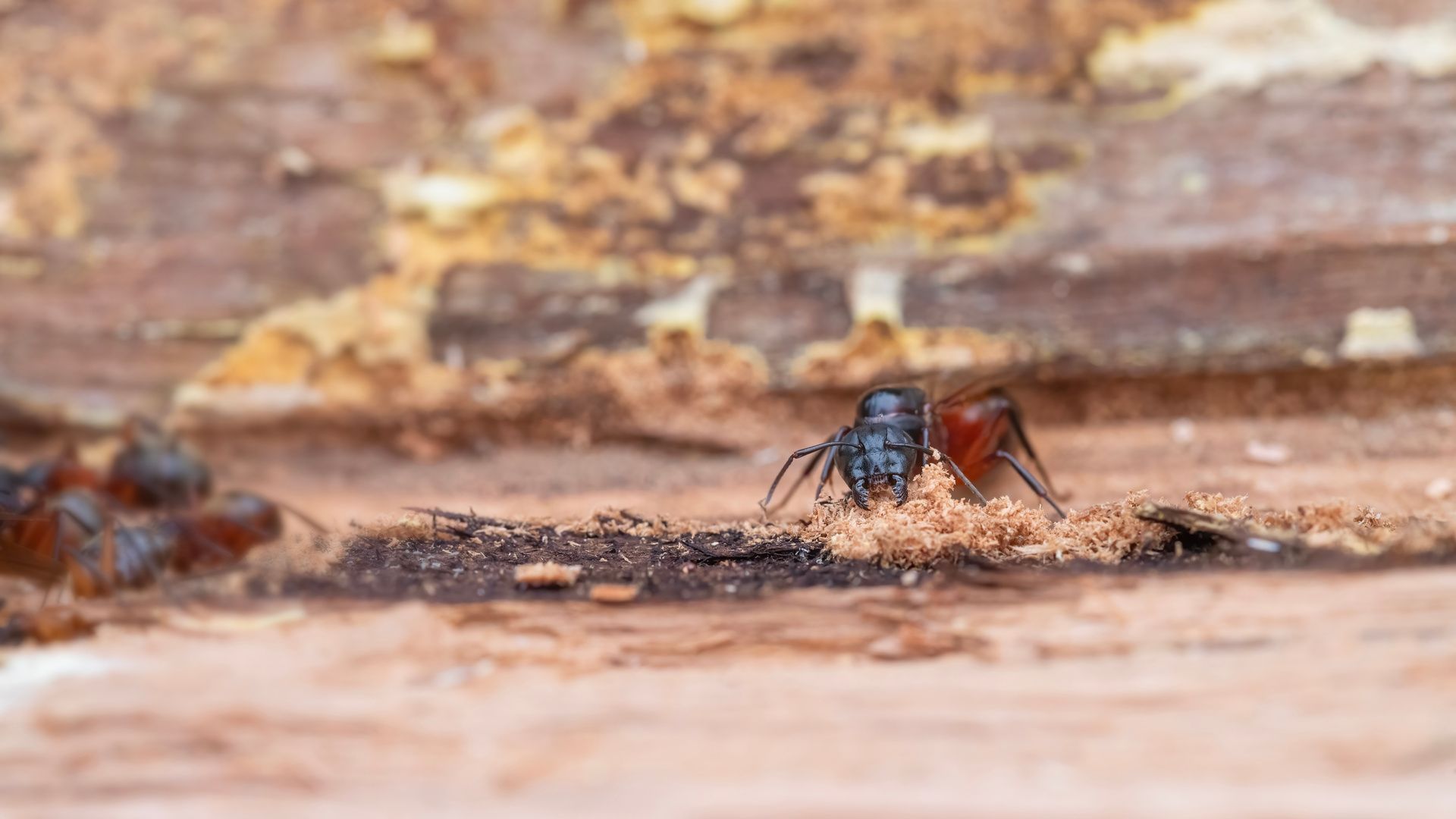
Carpenter ants are large and dark, usually black or dark brown, with a distinct pinched waist, a narrow segment between the thorax and abdomen that's visible to the naked eye. Their antennae are bent at an angle, like an elbow.
Termite workers, the ones most commonly found inside wood, are cream or off-white and much smaller. They look soft and pale next to ants. Most importantly, there's no visible waist. Their bodies are thicker and more uniform from front to back, with straight, bead-like antennae that don't bend.
The swarmers, the winged versions of each pest that emerge in spring, are where most homeowners get confused. Both carpenter ant swarmers and termite swarmers emerge around the same time of year and both look like flying ants at first glance. The physical differences:
Carpenter ant swarmers have unequal wings (front pair longer than the back), a pinched waist, and bent antennae- Termite swarmers have wings of equal length, no visible waist pinch, and straight antennae
- Termite swarmers shed their wings quickly after emerging; a pile of equal-length discarded wings near a window or exterior door is a strong termite indicator
Finding shed wings without the insects means you may have missed the swarm. The colony is already established somewhere in your home.
The Damage They Leave Behind
Both pests work inside wood, but what they leave behind looks different. Knowing what to look for tells you which pest you have and how far the damage has gone.
What to Look for in Your Home
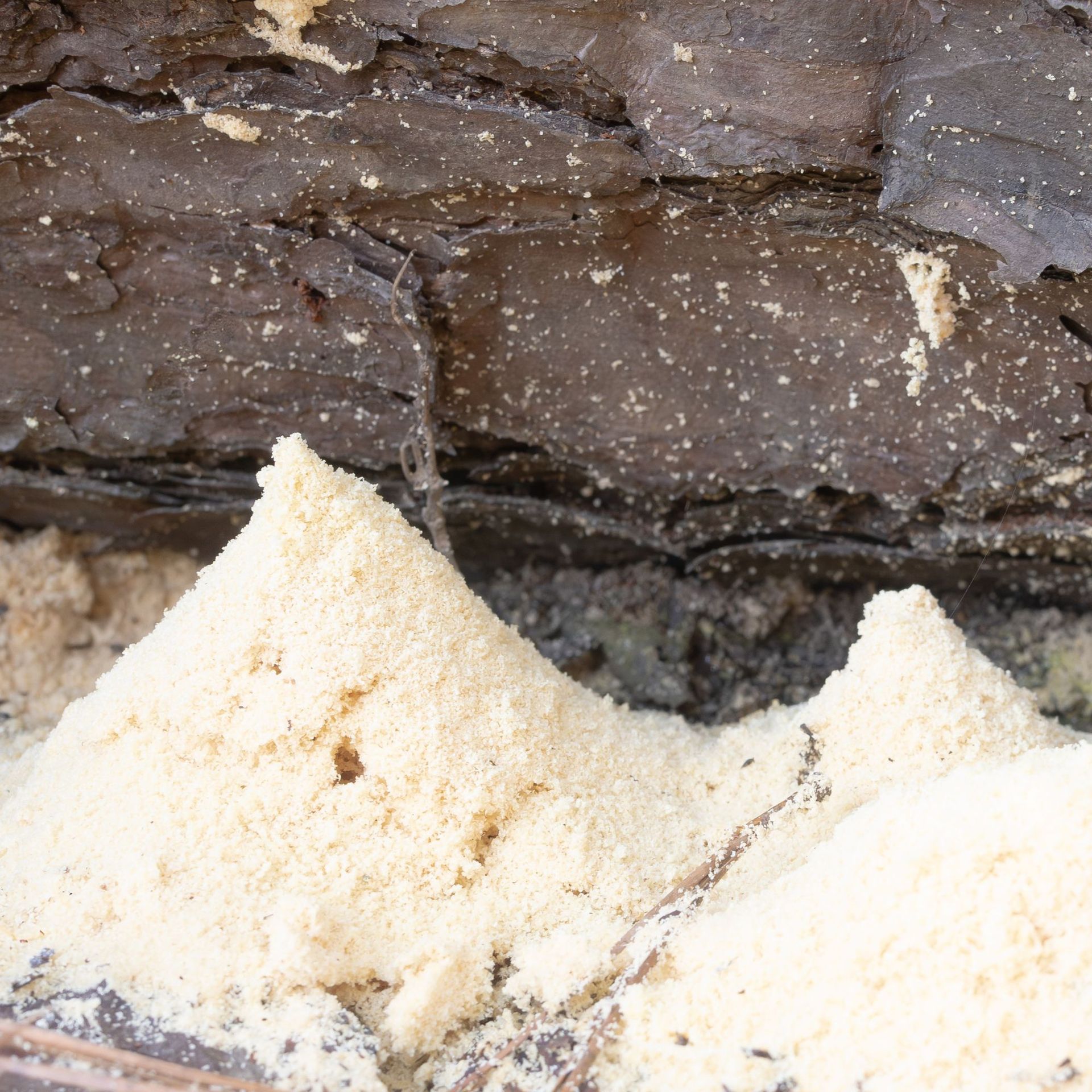
Carpenter ants don't eat wood. They excavate it to build nesting chambers, pushing the debris out as they go. That debris is the first sign most homeowners notice: a small pile of material at the base of a door frame, along a windowsill, or on a basement floor. It looks like coarse sawdust mixed with insect parts and other debris. Pest professionals call this frass, but the plain description is accurate enough.
The chambers themselves are clean and smooth-walled. Tapping on a wall where carpenter ants are active often produces a hollow sound, especially in door frames or around windowsills.
Termite damage looks completely different. Subterranean termites, the most common species in Hampton Roads, travel from the soil to the wood through mud tubes, pencil-width tunnels made of soil and wood debris built along foundation walls and any wood close to the ground. Finding a mud tube is the clearest sign you're dealing with termites rather than ants.
The wood itself tells a different story too:
Termite-damaged wood looks hollowed out from the inside, with a thin surface layer that buckles or collapses when pressed- Carpenter ant chambers are clean-cut and run with the grain of the wood
- Termite channels cross the grain and are packed with soil
Termite damage also progresses quietly over time. A colony can be active inside a wall, a floor beam, or the wood framing at the base of the walls for a year or more before a homeowner notices anything on the surface. That slow, invisible progression is part of what makes an early professional inspection valuable, especially in older Hampton Roads homes where ground-contact wood and crawl space moisture are common.
When to Call a Professional
Most homeowners won't get a close look at the actual insect. What they find is the damage or the swarmers, and in either case a professional identification matters before any treatment starts.
Why Getting It Right Matters
Termite control and ant control in Chesapeake require completely different approaches. Subterranean termite treatment typically involves a liquid applied to the soil around the foundation or a bait system that worker termites pick up and carry back to the colony. Neither approach does anything to a carpenter ant infestation.
Carpenter ant treatment targets the nesting sites and the moisture conditions that make those sites attractive in the first place. Carpenter ants almost always set up in wood that's already soft from water intrusion, a leaking window frame, water-damaged framing above a bathroom, or soft wood near the base of the walls. In Hampton Roads specifically, the combination of high humidity and older wood-frame construction means carpenter ant infestations often trace back to moisture under the house, air conditioner drain lines, or exterior trim. Treating the ants without addressing the moisture source means they'll be back.
If you're finding swarmers indoors in spring, especially near windows or exterior walls, a professional inspection is worth doing before you guess. The swarmers themselves are gone within a day or two, but what they left behind, shed wings, frass, or a mud tube, points to the answer.
We handle both. For a termite inspection or help from an ant exterminator in Chesapeake, call us at
(757) 420-4800. You can also visit our
termite control page or
pest control page to schedule a free inspection.
We serve homeowners across Hampton Roads, including:
- Chesapeake, VA
- Virginia Beach, VA
- Norfolk, VA
- Suffolk, VA
- Portsmouth, VA
- Hampton, VA
- Newport News, VA
- Poquoson, VA
- Smithfield, VA
- Gloucester, VA