

What Animal is in My Attic?
The animal in your attic is usually a squirrel or a raccoon, and the sound it makes is the fastest way to tell them apart. Squirrels are light and quick, active in daylight, and they chatter. Raccoons are heavy, move at night, and make a rolling or thumping noise you can follow across the ceiling. Rodents sound lighter and steadier than either and tend to stay inside walls, though they can also turn up above the ceiling. Raccoons fall under Virginia wildlife rules, and state law bars relocating a trapped raccoon. The animal must stay on the property where it was caught.
Scratching above the ceiling at eleven at night is unsettling. You are not imagining it, and you are not the only one in Norfolk hearing it this month. This usually starts in October, when squirrels look for a winter den as the nights cool off and raccoons look for a dry, sheltered spot to wait out the cold.
First, figure out what is up there. An animal in the attic gets handled two different ways depending on the species, and one of the two carries a legal restriction most homeowners have never heard about. You can usually narrow it down to the living room floor before anyone brings out a ladder.
Start With the Sound You Are Hearing
Timing and weight tell you almost everything. Listen for a night or two and note when the noise happens and how heavy it sounds.
- Squirrels: fast, light scratching overhead, mostly in daylight, sometimes with chattering
- Southern flying squirrels: an exception to the daytime rule, these smaller squirrels are nocturnal, so scratching and scurrying overhead at night does not always mean raccoon
- Raccoons: heavy thumps, dragging, and a rolling sound, almost always after dark
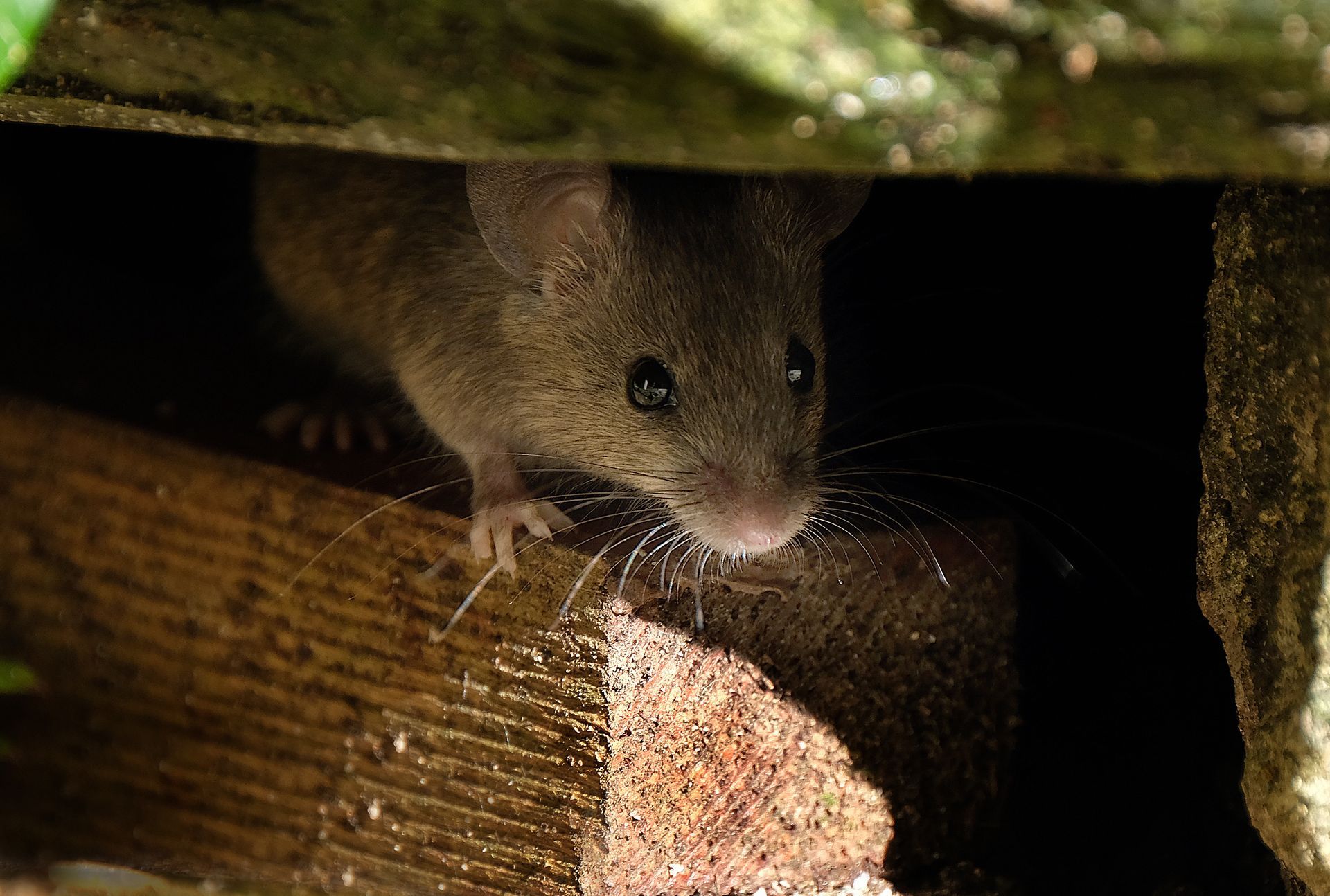
- Rats and mice: lighter and steadier than either, at night, and often inside a wall, though they can also be heard above the ceiling
That third line matters more than it looks. Rodents in the walls are a different problem with a different fix, and we would rather you know which one you have before anybody starts pulling insulation. If the noise is behind a wall instead of over your head, our
pest control
team handles that side.
Squirrels and Raccoons Cause Different Damage
Size is the practical difference. A gray squirrel weighs about a pound and can get in through a gap about the width of a golf ball, usually where the roof edge meets a gutter, along the trim board behind the gutter once it softens, or where the roof overhang meets the wall.
A raccoon weighs 8 to 20 pounds, somewhere between a house cat and a small dog, and it does not need to find a gap. It pulls open a soffit panel, the flat board that closes in the underside of a roof overhang, bends a vent cover back, or works a loose shingle until the hole is big enough.
Squirrels chew. That is the real cost with them, because electrical cable is about the thickness of a twig and a squirrel's front teeth never stop growing, so it gnaws to wear them down. Chewed wiring in an attic is a fire risk, and it's why we don't tell anyone to wait out a squirrel until spring.
Raccoons do coarser damage: flattened insulation, torn ductwork, and a mess of droppings and urine in one corner set aside as a latrine. A raccoon in the attic for a season can stain a ceiling from above.
What to Look for in the Attic
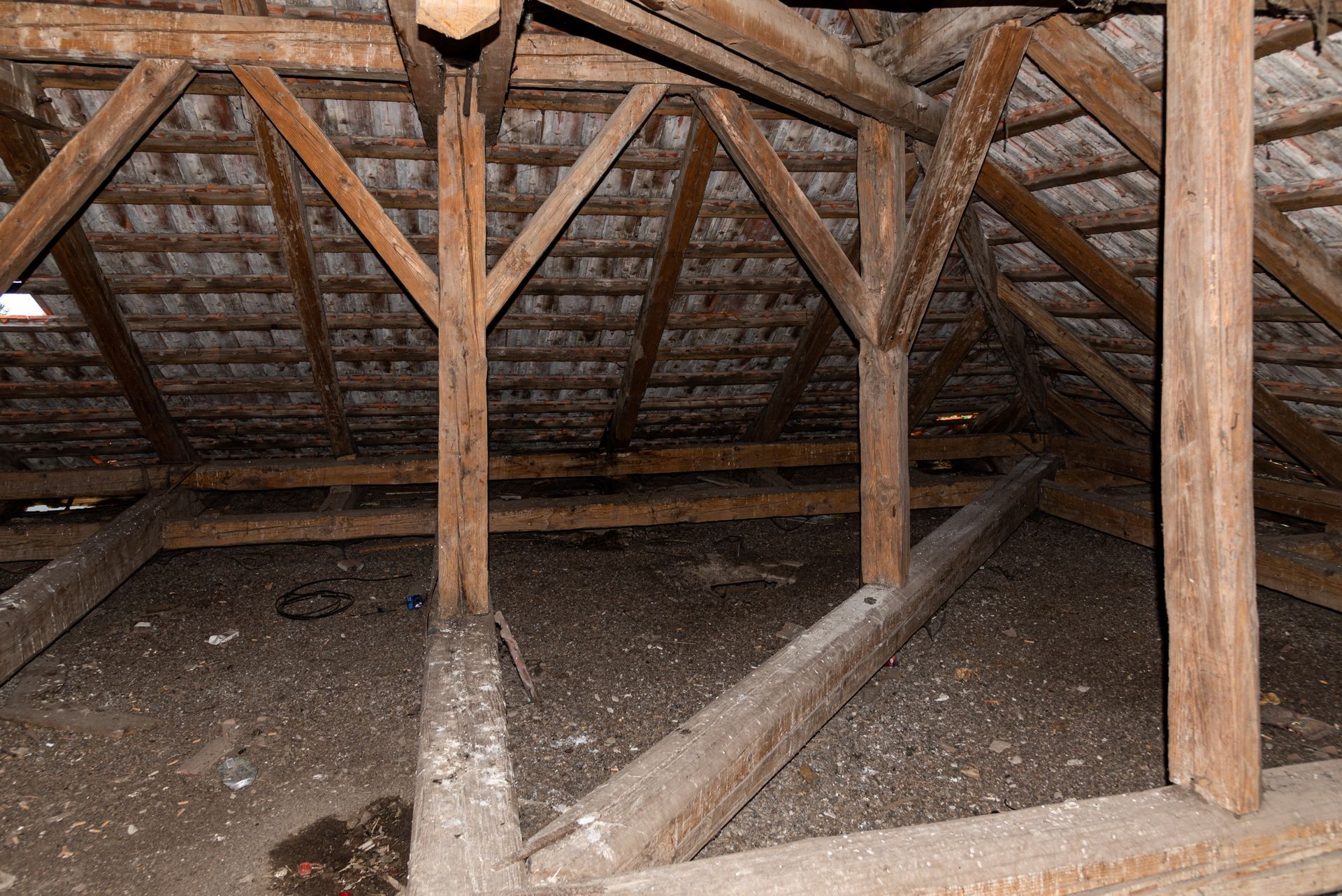
If you can get up there safely with a flashlight, a few minutes of looking usually settles the question.
- Droppings, which are about 3/8 inch long with rounded ends from a squirrel, and 2 to 3 inches long from a raccoon, often with berry seeds in them
- Insulation pushed into a pile or hollowed into a nest shape
- Wires with the coating stripped or chewed through
- Daylight showing under the roof overhang, a bent vent cover, or a soffit panel out of line
Check the outside of the house too, on a clear day, from the ground. Stains and rub marks around a hole are a good sign it is being used, because animals traveling the same route leave grease from their fur on the edges.
A word of caution before you go up. Raccoon droppings can carry raccoon roundworm, a parasite whose eggs survive in dried feces and become airborne when disturbed. Wear a fitted N95 mask and gloves, avoid sweeping or stirring up dust, and do not touch droppings with bare hands.
Raccoons in Virginia also carry rabies at higher rates than most wildlife, so never approach or corner an animal that is still in the attic. Back out and call a professional.
Virginia Law Bans Relocating Raccoons
Raccoons are covered by Virginia wildlife regulations. Trapping one and driving it out to the country breaks those rules; under Virginia law, you must keep a trapped raccoon on the property where you caught it, and relocating it is not permitted. The rule exists for a reason: moved raccoons can carry disease into new areas, and many do not survive the move.
There's also a practical reason to leave it alone. Raccoons have their young in spring, so from about March through June a female in the attic often has a litter with her, and removing the mother leaves the young sealed in behind her. Gray squirrels have a second litter in late summer, so a squirrel nest can still hold young in the fall.
Virginia Code §29.1-521 goes further. It is illegal to destroy or molest the den or young of any wild animal, including raccoons, so attempting a DIY removal during nesting season is both a legal and practical risk.
Some Norfolk and Hampton Roads localities enforce wildlife ordinances stricter than the state code, so check with your local Commonwealth Attorney’s office before setting any trap yourself.
In any season, the job means confirming nothing is left inside before anything gets closed up.
How Removal and Exclusion Work
Wildlife work is removal and exclusion, not extermination. The animal comes out alive, then you close the entry point so the next one cannot follow the same path in. Skipping the second half is why so many homeowners deal with this two years running.
A proper inspection starts outside, walking the roof edge and overhangs to find the opening, then moves into the attic to look for nesting sites and damage. Chimneys and dryer vents get checked as well, since a chimney with no cap on it is a common way for a raccoon to get into a house and a loose dryer vent hood suits a squirrel just fine.
Once we get the animal out, we seal the entry with material an animal cannot chew or pry through, and we check the rest of the roofline for the next weak spot. Fouled insulation needs to come out; leaving it traps the odor that draws the next animal to the same hole.
We have been doing this work across Hampton Roads since 1970, three generations of one family, and our technicians hold a Commercial Nuisance Animal Permit issued by the Virginia Department of Wildlife Resources. We build every plan for the house in front of us, and there are no contracts to sign.
Norfolk has a lot of housing stock old enough that the roof overhangs and the trim boards behind the gutters have softened, and a squirrel can find that edge quickly once the weather turns.
If something is moving over your ceiling at night, call us at (757) 378-0476 or reach out to our office, and we can talk through what you are hearing and the right next step before the hole gets any wider.
We serve homeowners across the region, including:
- Chesapeake, VA
- Virginia Beach, VA
- Norfolk, VA
- Suffolk, VA
- Portsmouth, VA
- Hampton, VA
- Newport News, VA
- Poquoson, VA
- Smithfield, VA
- Gloucester, VA