



What to Do If You See Termite Swarmers: A Hampton Roads Homeowner Guide
Termite swarmers are winged reproductive termites that emerge in late spring and early summer to start new colonies. Seeing them near your home, or finding piles of discarded wings, means a mature termite colony is active nearby. Here is what that means, how to tell swarmers from flying ants, and what to do next.
What Termite Swarmers Actually Are
If you noticed a swarm of winged insects around a window or doorframe recently, or found a pile of discarded wings on the sill, there’s a good chance you’re looking at termite swarmers. It’s one of the most common calls we get from Hampton Roads homeowners every May and June, and it almost always comes with the same question: does this mean I have termites?
Not necessarily. But it does mean termites are active nearby, and that’s worth taking seriously.
They’re Not the Colony. They’re the Colony’s Expansion Plan
Swarmers are reproductive termites. Their job is to leave the original colony, mate, and start new colonies elsewhere. They don’t eat wood. They don’t cause structural damage on their own. What they represent, though, is that a mature termite colony exists somewhere in or near your home, one that’s been established long enough to produce reproductives.
Eastern subterranean termites, the species responsible for most termite damage in Virginia, typically swarm in spring and into early summer, usually on warm days after rain. In the Hampton Roads area, that window tends to run from late March through June. If you’re seeing swarmers right now, you’re seeing them at the peak of their season.
The swarm itself lasts only a short time, often less than an hour. Most swarmers don’t survive. But if a mated pair finds a suitable spot in or near your home, they can start a new colony that you won’t notice for years.
Swarmers vs. Flying Ants: How to Tell the Difference
The Wings Are the Fastest Tell
This question comes up constantly, and it’s worth knowing the answer before you panic, or before you dismiss something you shouldn’t.
Termite swarmers have two pairs of wings that are equal in length and extend well past the body. Flying ants have wings too, but the front pair is noticeably larger than the back pair. If the wings look symmetrical and long, you’re likely looking at termites.
A few other differences to check:
- Waist: Termites have a thick, straight midsection. Flying ants have a pinched waist.
- Antennae: Termite antennae are straight. Ant antennae bend at an elbow.
- Color: Swarmers are usually dark brown or black.
If you’re not sure, collect a few of the insects or take a photo and hold onto the discarded wings. Any pest control professional can identify them in seconds.
What to Do If You Find Swarmers
Don’t Spray Them. Find Out Where They Came From
The instinct to reach for a can of spray is understandable, but it doesn’t help. Killing the swarmers themselves does nothing to address the colony, and it can actually make it harder to figure out what you’re dealing with.
The more useful thing to do is pay attention to where they’re coming from. Swarmers emerge from a specific exit point: a crack in the foundation, a gap along a baseboard, a windowsill, or a spot in the drywall. Knowing the location matters because it gives a professional a starting point.
Also check for:
- Discarded wings in piles on floors, windowsills, or near doorframes (swarmers shed their wings immediately after mating)
- Mud tubes along the foundation, crawl space walls, or exposed wood framing. These are the tunnels subterranean termites build to travel between soil and wood
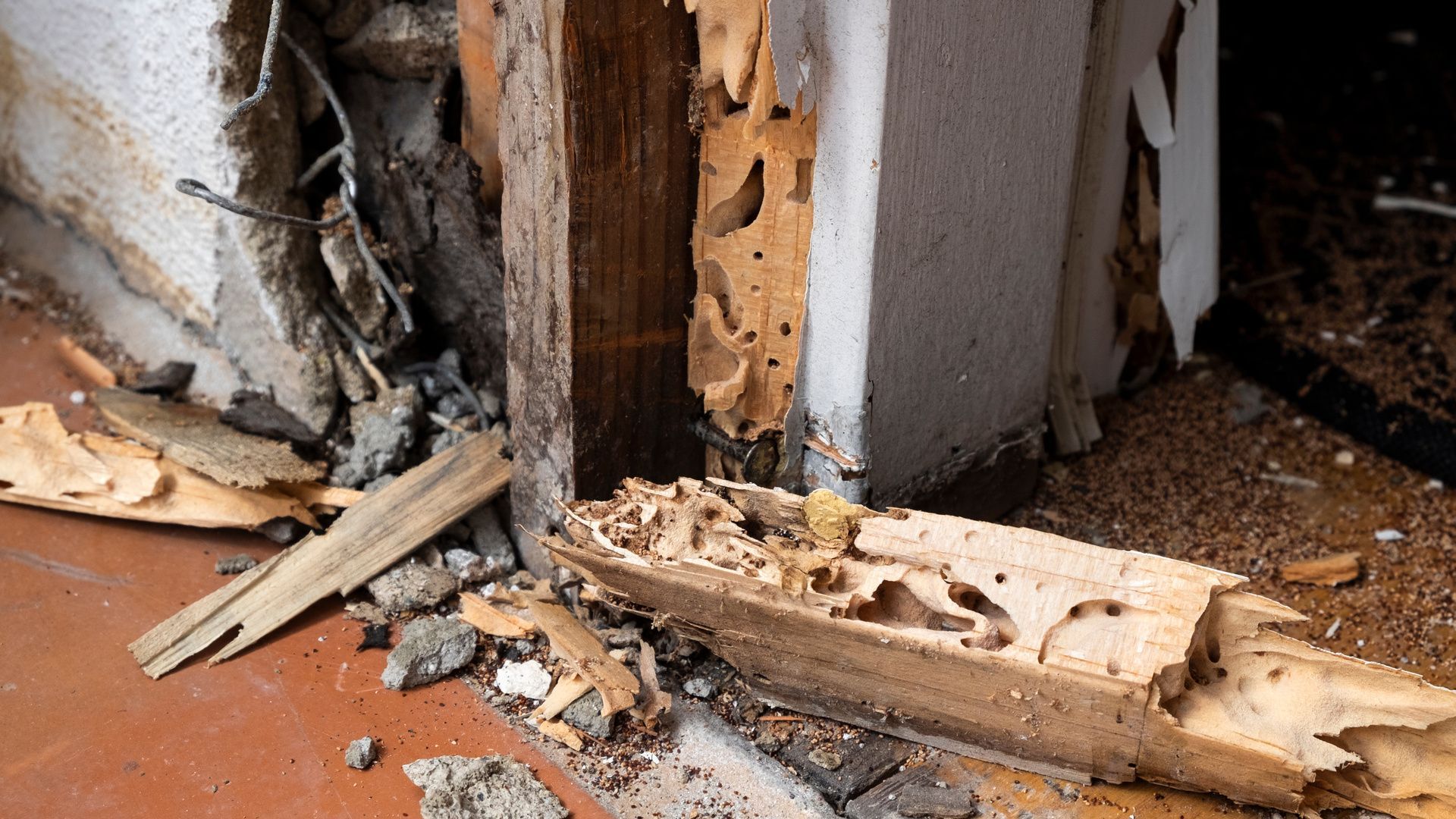
- Soft or hollow-sounding wood anywhere near where the swarm appeared
- Bubbling or uneven paint on walls, which can indicate moisture from termite activity beneath
None of these signs definitively confirms active damage on their own, but two or three together are a strong indicator that something needs to be inspected.
Why This Time of Year Matters
Early Action Is the Difference Between Minor and Major Damage
Subterranean termites work slowly compared to drywood termites, a faster-moving species found more in the South, but they work constantly. A colony that goes undetected for three to five years can hollow out significant load-bearing wood (beams, joists, framing) before any visible surface damage appears. Homeowners in Hampton Roads sometimes discover the problem only when flooring starts to feel soft or a contractor opens a wall for another reason.
Swarmer season is actually one of the better times to catch a problem, because the colony is advertising itself. A visible swarm or a pile of wings is more than most homeowners ever get as a warning sign. Taking it seriously now, even if an inspection comes back clean, costs very little. Waiting and hoping costs much more if the inspection eventually finds what you were afraid to look for.
The tidewater climate doesn’t help. Hampton Roads summers are humid, and subterranean termites need moisture to survive. The combination of warm soil, persistent humidity, and the wood construction common in this area makes the region one of the higher-risk zones in Virginia for termite activity.
When to Call a Professional
If Swarmers Came From Inside the House, Don’t Wait
Swarmers outdoors in the yard, emerging from a tree stump or a wood pile, may indicate a colony that hasn’t yet reached your home. That’s still worth addressing, but the urgency is lower.
Swarmers emerging from inside the home (walls, floors, window frames, or near the foundation) almost always mean the colony is already in your home. That warrants a professional inspection as soon as you can schedule one.
Our termite control service includes a 30-point inspection that covers the foundation, crawl space, any visible wood beams or supports, and any other areas where subterranean activity is likely to hide. If we find evidence of activity, we’ll walk you through exactly what we found and what treatment looks like before anything is scheduled.
Call us at (757) 420-4800 to book an inspection. We serve homeowners throughout: